

Hamdan bin Mohammed reviews Dubai Metro Blue Line progress and new initiatives
- Hamdan bin Mohammed reviews new metro train design, rail inspection initiatives and Blue Line progress
His Highness Sheikh Hamdan bin Mohammed bin Rashid Al Maktoum, Crown Prince of Dubai, Deputy Prime Minister and Minister of Defence of the UAE, and Chairman of The Executive Council of Dubai, reviewed the new design of the Dubai Metro Blue Line trains and the advanced smart technologies they incorporate. These innovations reflect Dubai's commitment to developing an integrated, sustainable public transport system that raises the quality of services for residents and visitors while keeping pace with the emirate's rapid population growth and urban development.
His Highness also reviewed two initiatives that use robotics and artificial intelligence to inspect and maintain railway infrastructure, enhance safety and operational efficiency, support proactive maintenance, and improve asset reliability and sustainability. He was briefed on progress in the construction of the Blue Line, including engineering innovations used in building the tunnels and the bridge across Dubai Creek, as part of Dubai's efforts to develop an integrated, sustainable transport network that keeps pace with population and urban growth and enhances quality of life.
The visit took place at the Blue Line worksite in Dubai Festival City, where His Highness was received by His Excellency Mattar Al Tayer, Director General, Chairman of the Board of Executive Directors, Roads and Transport Authority "RTA", together with several officials from RTA and the MAPA–LIMAK–CRRC consortium delivering the project.
Contemporary train design
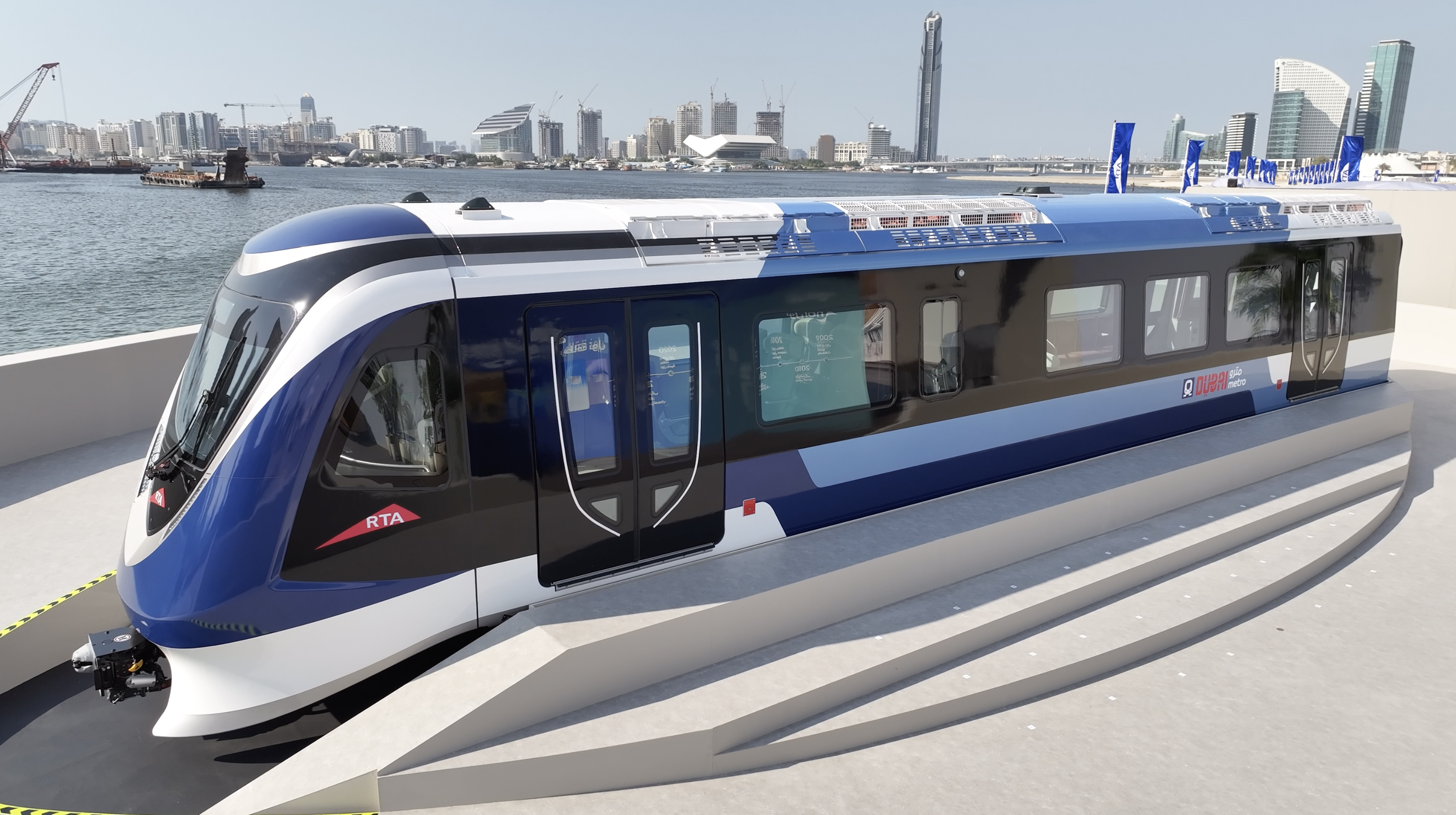
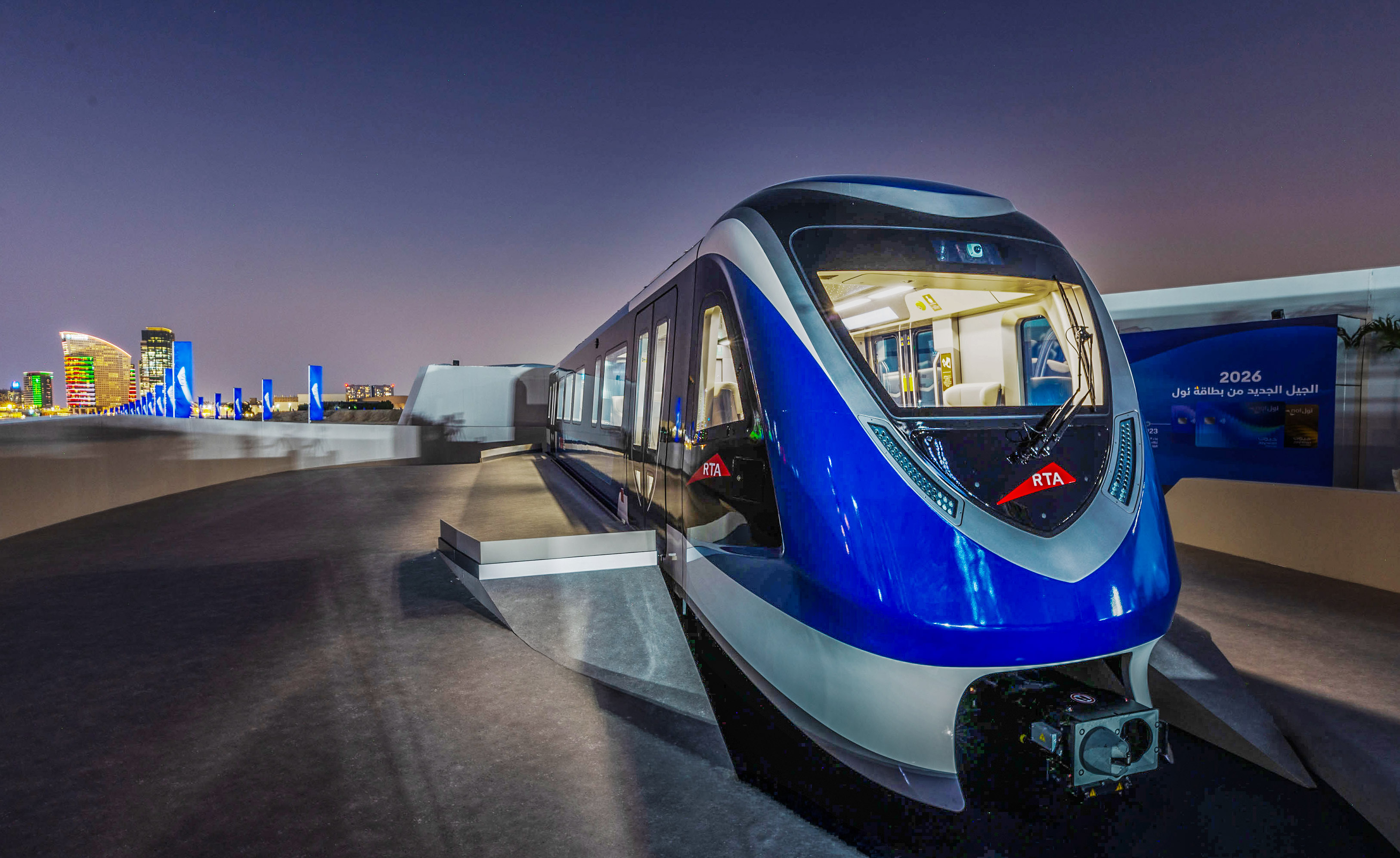
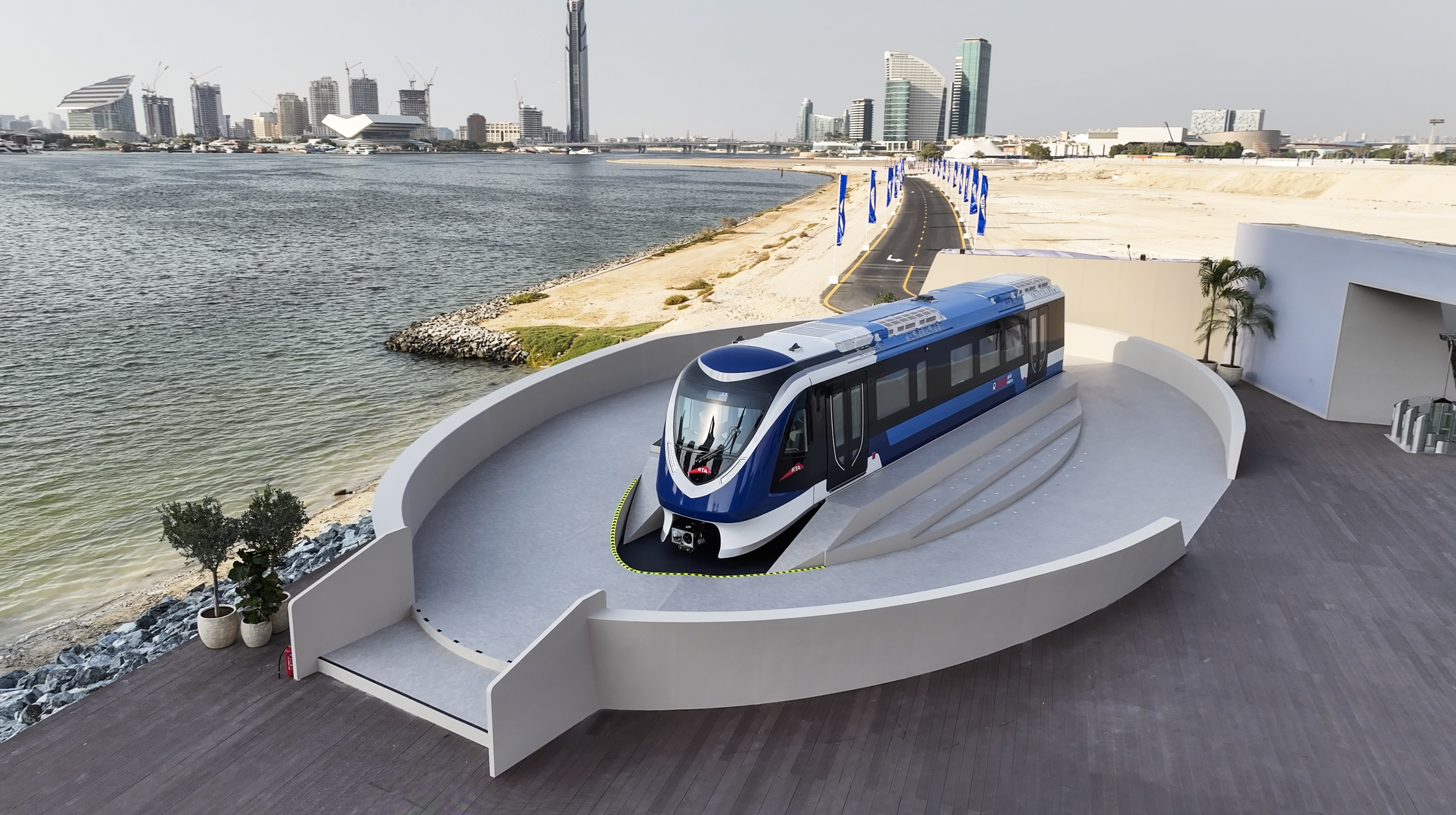
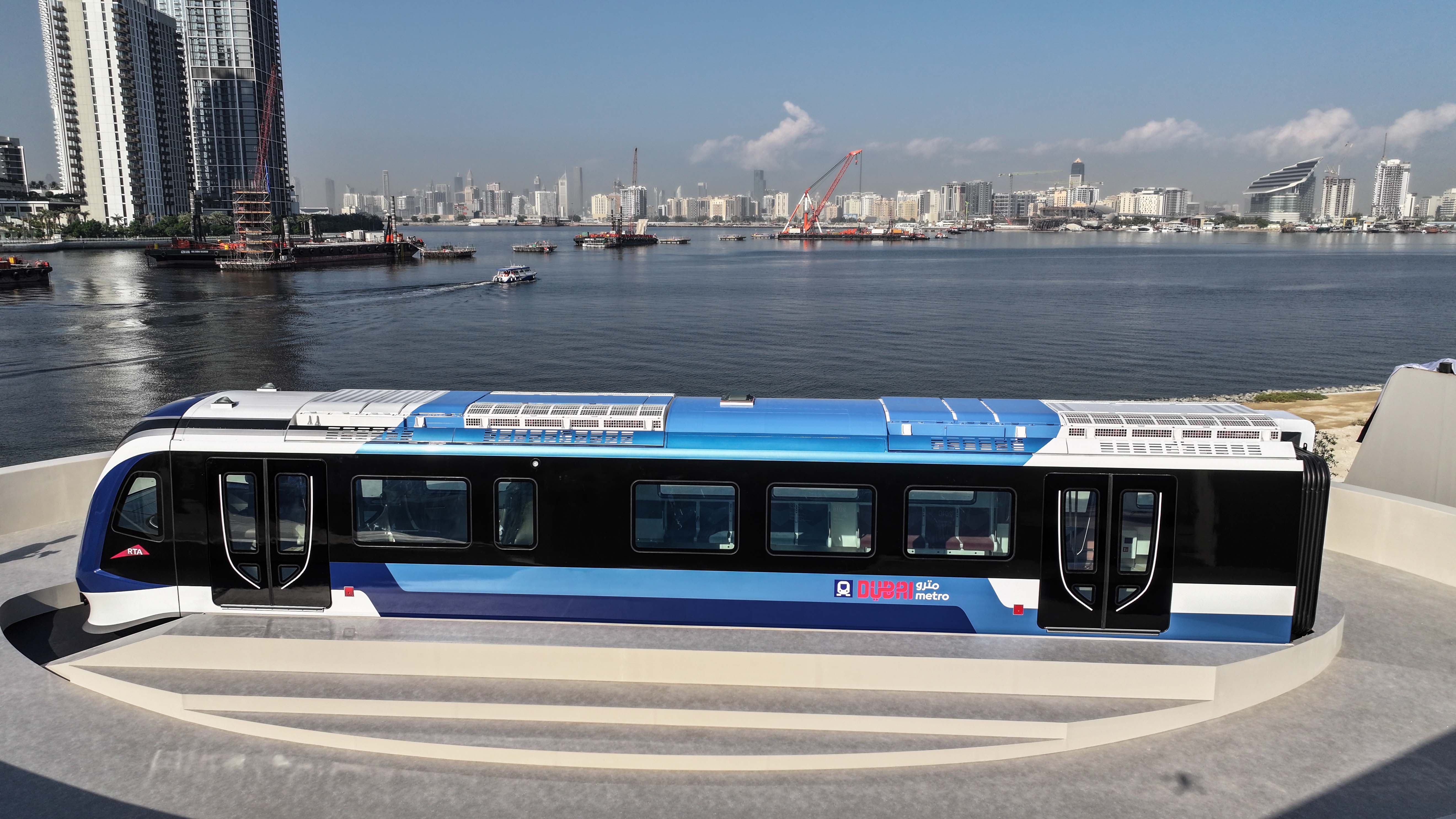
His Highness inspected the new Blue Line train model, which has a design capacity of 675 passengers per journey and a total capacity of 1,246 passengers per journey. Its exterior design draws on strength, speed and streamlining, reflecting Dubai's renewed identity and its constant aspiration to lead in developing urban mobility solutions.
The trains combine aesthetic appeal, operational efficiency and passenger comfort. A streamlined exterior and modern interior features deliver an advanced travel experience that meets the needs of different groups in society. The design is in line with internationally recognised standards for the design and operation of urban rail systems, reinforcing the Metro's appeal as a primary mode of daily transport and raising comfort and service quality for its users.
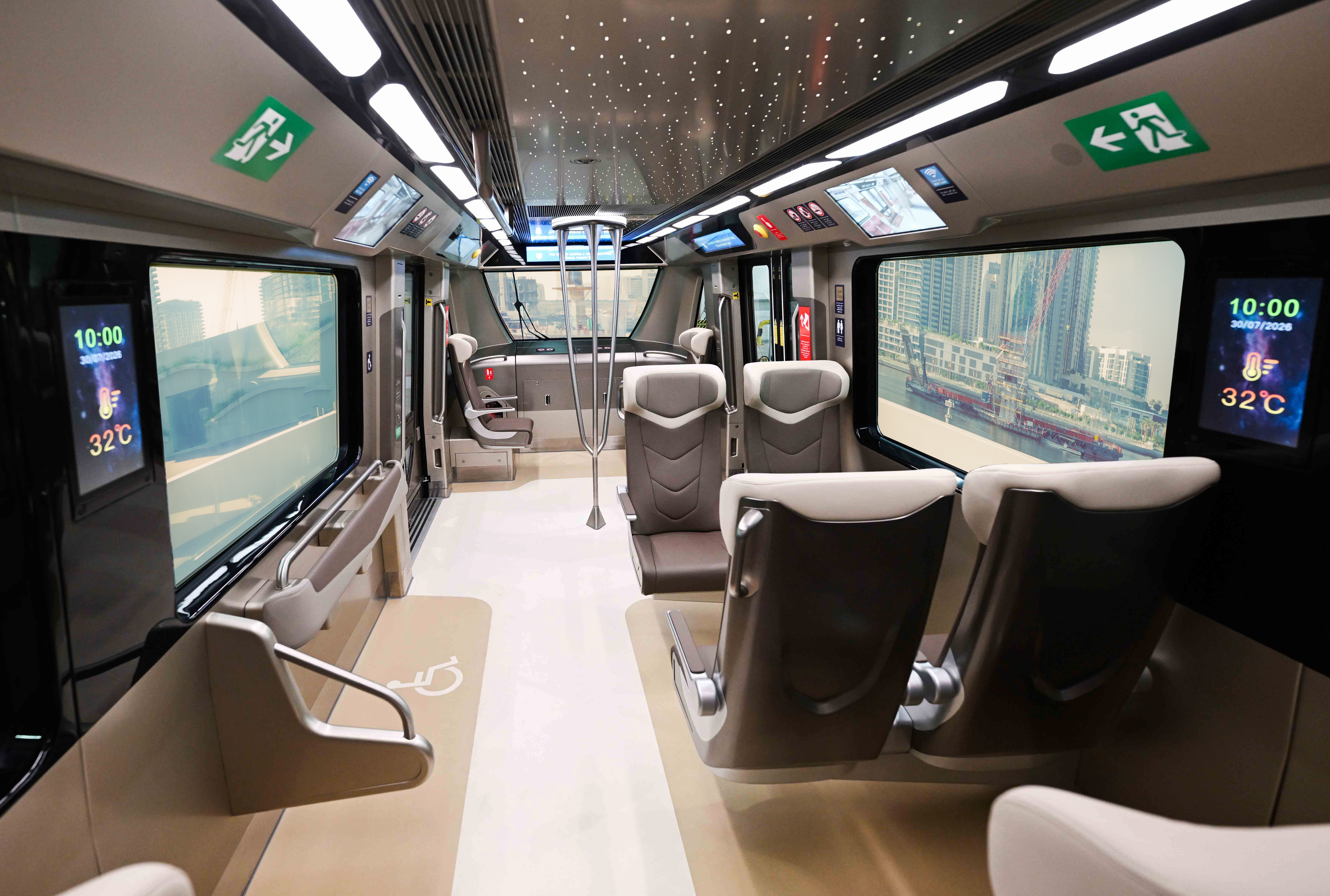
Al Tayer briefed His Highness on the interior design, which has three main categories: Gold Class, Silver Class and a dedicated carriage for women and children. Gold Class offers high levels of comfort and privacy with an added touch of luxury. It features contemporary seating, wireless chargers for smart devices, digital screens showing advertisements, the time and date, and intelligent lighting that adapts automatically to ambient conditions. A distinctive ceiling design that evokes a star-studded sky adds to the cabin's appeal and the passenger experience.
Silver Class and the carriage for women and children are designed to balance capacity, comfort and ease of movement. Seating and interior space are arranged for practicality, large windows give wide views of the areas the Metro passes through, and digital screens show the route and stations dynamically.
His Highness also viewed the smart systems built into the new trains. These include advanced cameras that detect obstacles on the track, intelligent cameras that count passengers and monitor occupancy, and real-time image and data processing. The systems allow passenger density to be tracked and related information provided, helping improve capacity and operational efficiency.
CASCO Train Simulation Laboratory
His Highness reviewed the project to establish an advanced research and development centre and innovation laboratory, in collaboration with CASCO SIGNAL LTD. CASCO, a company specialising in signalling, communications and control systems for metro and railway networks. It forms part of the Dubai Metro Blue Line project.
Al Tayer briefed His Highness on the train systems simulator, the first laboratory for developing train systems in the Middle East. It provides an environment for testing the integration of signalling, communications and control systems, and for simulating operating conditions before they enter service, strengthening readiness, safety and reliability.
Al Tayer outlined the laboratory's technical and operational benefits. It will provide an advanced platform for acceptance testing and technical verification locally in Dubai, support the development and modernisation of Metro systems, cut testing time by 85% and raise the accuracy of the train punctuality indicator to more than 99.7%. It will also provide an integrated reference base of technical and operational data for future Metro projects, reinforcing Dubai's standing as a regional hub for research, development and innovation in the rail sector and modern transport systems.
Automated Inspection System
His Highness also viewed the Automated Rail Infrastructure Inspection System "ARIIS", developed by RTA's Rail Agency. This mobile system monitors the condition of rail infrastructure. It relies on Light Detection and Ranging "LiDAR" technology and artificial intelligence to analyse data, detect defects and provide technical recommendations.
The system helps develop inspection and maintenance methods and strengthens the ability to predict asset condition and identify maintenance needs proactively. It targets an 80% reduction in inspection time, a 50% reduction in resources used, and ten times more data collected and analysed. It also aims to improve safety by 50% and raise early fault detection and reliability by 90%, underscoring the importance of modern technology in raising the efficiency of rail maintenance.
Al Tayer briefed His Highness on how the system reduces the need for inspection teams to enter the tracks and keeps digital records of measurements and historical asset data. This enhances workforce safety, improves the accuracy of maintenance planning and supports uninterrupted network operations.
Blue Line progress
His Highness reviewed progress on the Dubai Metro Blue Line, which represents a strategic addition to the Metro network and strengthens the integration of Dubai's public transport system.
He was briefed on the project's latest developments. Overall completion has reached 29%, with more than 14,000 workers contributing over 33 million working hours. Completion stands at 32% for underground stations, 55% for tunnel excavation, 16% for elevated stations and 17% for bridge works, while construction of bridge piers has reached 62%.
These figures reflect progress across the project's construction sites, under an integrated approach that harnesses modern technologies and engineering innovations, improves the efficiency of resource management and delivery, and upholds the highest standards of quality and safety.
Dubai Creek Bridge innovations
Al Tayer briefed His Highness on the engineering innovations used in building the Blue Line bridge across Dubai Creek. Spanning 1.3 km, it will be the Dubai Metro's first crossing over the Creek and one of the project's most significant engineering components. The construction methodology takes into account the bridge's location over the waterway, the need for engineering precision, protection of the marine environment and uninterrupted marine navigation throughout construction.
He explained that the bridge is built from precast concrete segments, installed in a balanced manner using specialised cranes and platforms that operate from completed piers. This reduces reliance on floating cranes and temporary marine platforms, keeps marine traffic flowing smoothly through the Creek, and raises construction efficiency, workforce safety and the precision of the works.
He added that a dedicated yard near the Creek is being used to precast the segments to defined technical specifications and quality standards. The segments are delivered straight to the installation sites, reducing the need for transport.
Blue Line station designs
His Highness also reviewed the interior designs of the Blue Line stations, which comprise five distinctive architectural concepts. They include the iconic Emaar Properties Station, inspired by the concept of a crossing gateway, and four designs inspired by the natural elements of water, air, fire and earth.
The designs combine contemporary architecture with Dubai's cultural character through open spaces, natural light, flowing lines and nature-inspired colours. Each station has its own distinctive visual identity, in a travel environment that takes passenger comfort and ease of movement into account. Together, the designs enhance the Metro experience and embody Dubai's vision of combining architectural excellence, engineering innovation and quality of life.
The evolution of nol
His Highness reviewed the evolution of the nol electronic payment system, from its launch alongside the Dubai Metro in 2009 to its expanded use for taxis, parking and retail services.
The review also covered the nol Plus loyalty programme and the digital nol card, the move towards account-based ticketing, and the launch of the next generation of nol–Jaywan cards this month, in collaboration with Al Etihad Payments, a subsidiary of the Central Bank of the UAE. This is a major step forward for electronic payments. It strengthens the link between public transport and digital payments and offers easier, more flexible payment options, in line with Dubai's direction towards digital transformation and smart services.
The Blue Line and future mobility
The Dubai Metro Blue Line is a strategic project that strengthens the integration of the public transport network and extends the reach of its services. The line runs for 30 kilometres, of which 15.5 are underground and 14.5 above ground. The line has 14 stations, including an iconic station at Dubai Creek Harbour and three interchange stations: two connecting it to the Red and Green Lines, and one linking its two branches.
The project will connect key areas undergoing rapid urban and population growth: Mirdif, Al Warqa'a, International City, Dubai Silicon Oasis, Dubai Academic City, Dubai Festival City and Dubai Creek Harbour. It strengthens links between residential communities, business districts, educational areas and development zones, and supports the concept of an integrated city in which residents can easily reach services and economic and social activities.
The project also supports the Dubai 2040 Urban Master Plan by encouraging development around public transport stations and offering sustainable mobility options that link residential communities with business, education and service centres. This contributes to improving quality of life, raising the efficiency of the transport network and strengthening Dubai's appeal as a place to live, work and invest.
The Blue Line embodies the emirate's vision of building advanced infrastructure that anticipates future needs, keeps pace with population and urban growth, and strengthens the integration of the transport network. By using the latest technologies and engineering innovations at every stage of construction and operation, the project helps consolidate Dubai's position as a global model for smart, sustainable mobility and supports its goal of becoming the world’s best city to live, work and visit.
More on these topics
Most Recent News

Palm Springs launch records AED5.5 billion in sales amid strong demand for family homes

Dubai ranks first globally in the UN Local Online Service Index (LOSI) 2026




 For an optimal experience please