

Latifa bint Mohammed honours five winners of Dubai Future Solutions – Prototypes for Humanity Awards
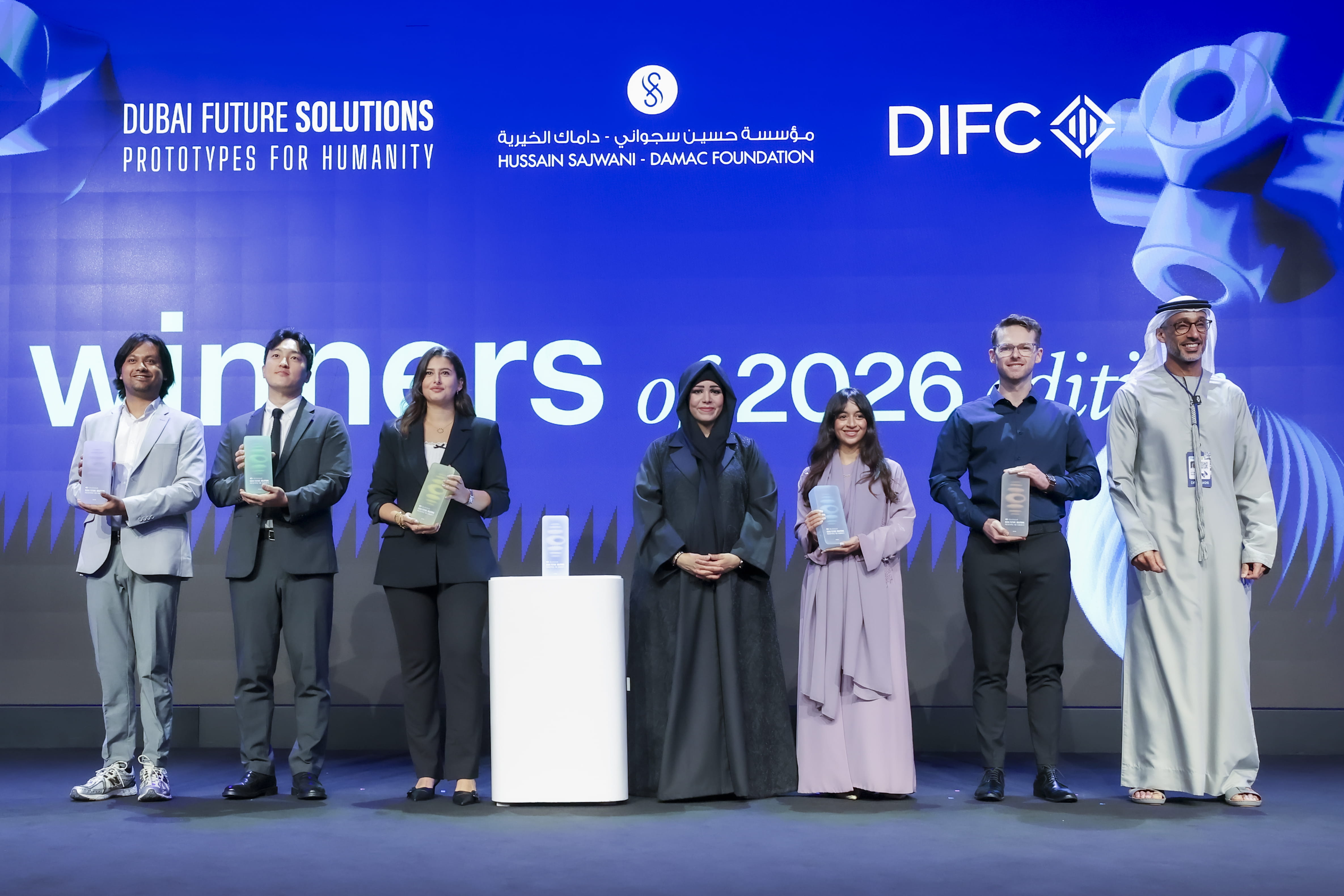
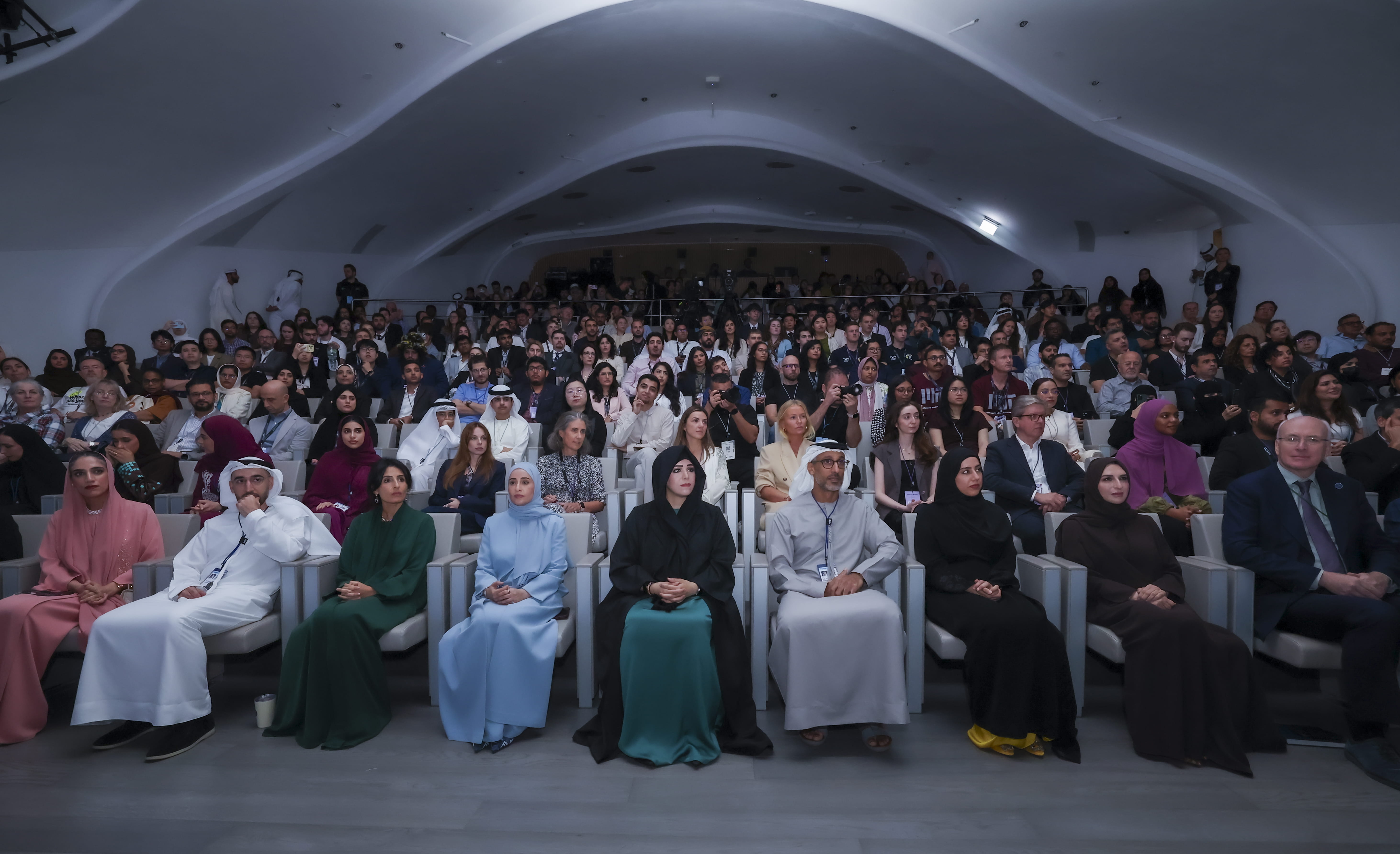
Her Highness Sheikha Latifa bint Mohammed bin Rashid Al Maktoum, Chairperson of Dubai Culture and Arts Authority (Dubai Culture), today honoured five outstanding student innovations at the 2026 Dubai Future Solutions – Prototypes for Humanity’ Awards. The winning teams were recognised for exceptional solutions to global social and environmental challenges at an award ceremony held on the final day of this year’s exhibition during Dubai Future Week 2026.
Her Highness and an expert jury selected the five winners from a shortlist of 100 projects showcased at The Boulevard, Emirates Towers, from 18 to 21 November. This year, thousands of solutions were submitted by students, recent graduates and professors from more than 1,000 universities across 120 countries, with the final 100 representing more than 75 universities.
The winners received a joint prize of $100,000 to support them in advancing their research. The Dubai Future Solutions – Prototypes for Humanity initiative is held under the directives of His Highness Sheikh Hamdan bin Mohammed bin Rashid Al Maktoum, Crown Prince of Dubai, Deputy Prime Minister and Minister of Defence of the UAE, and Chairman of the Board of Trustees of the Dubai Future Foundation. The programme is held under the patronage and leadership of Her Highness Sheikha Latifa bint Mohammed bin Rashid Al Maktoum.
HH Sheikha Latifa bint Mohammed highlighted how the initiative reflects Dubai’s role in bringing together innovators and researchers to turn knowledge and promising ideas into solutions that improve people’s lives.
Her Highness said: “When we invest in people, knowledge and innovation, we help build a more prosperous and sustainable future. These projects show how a promising idea, and the commitment to develop it, can become a practical solution to a global challenge and make a meaningful difference in people’s lives.”
Her Highness added: “Alongside recognising research achievements, this initiative brings academic institutions, the public and private sectors, investors and decision-makers together to help promising ideas reach the people who can benefit from them. Through these connections, we can support innovators as they develop their research, put it into practice and extend its impact.”
Her Highness emphasised that today’s global challenges call for new forms of collaboration across borders and disciplines.
“Dubai will continue to welcome ambitious ideas that can help build a better future for humanity. Innovation gives us a shared language through which we can learn from one another, work together and create opportunities for progress and prosperity,” Her Highness concluded.
A joint effort between Prototypes for Humanity, an Art Dubai Group initiative, in partnership with Dubai Future Foundation, the Hussain Sajwani – DAMAC Foundation and Dubai International Financial Centre, the programme supports university innovators from around the world in advancing their science-based solutions towards real-world application and growth.
The five winners of the 2026 edition were selected under five award categories: Health Diagnosis and Therapies, Circular Systems, Urban Society, Energy Futures and Life Resources.
Circular Systems
Gigatonne Bio, developed by Alia Almansoori and Joseph Lee from Cornell University in the United States, was recognised for using engineered bacteria to recover nickel, cobalt and platinum-group metals from mine waste, while permanently locking away carbon dioxide as a stable mineral.
Energy Futures
Laser Graphene Balls, developed by Rasha Diab, Mohammad H. Al-Sayah, Oussama M. El-Kadri and Mehmet Egilmez from the American University of Sharjah in the UAE, was recognised for a one-step laser method that turns commercially available materials into 3D graphene balls and builds them directly into energy-storage electrodes. The electrodes kept 96% of their performance after more than 8,000 charge cycles.
Health Diagnosis and Therapies
Green Lipids, developed by Connor Stockley, Patrick Arbuthnot, Robin Klintworth, Kristie Bloom, Abdullah Ely and Dylan Kairuz from the University of the Witwatersrand in South Africa, was selected for turning cashew nutshell waste into bio-based lipids that deliver mRNA medicines into cells. The approach offers a locally scalable alternative to costly petrochemical ingredients, which could widen access to vaccines and genetic therapies.
Life Resources
Solarstill Box, developed by Jungwoo Kim and Minsu Kim from the Korea Advanced Institute of Science and Technology (KAIST) in South Korea, was recognised for a flat-pack solar still that turns salty or contaminated water into drinking water without electricity. Field-tested in Tanzania, each unit produces up to 7.5 litres of drinking water a day, at a target cost below $20.
Urban Society
Litmus, developed by Rishav Chourasia and Dr. Uzair Javaid from the National University of Singapore, received recognition for a tool that independently tests whether companies keep their privacy promises, including whether an AI model has memorised personal data.
For more information on ‘Dubai Future Solutions – Prototypes for Humanity’, please visit prototypesforhumanity.com or follow @prototypesforhumanity
For more information about Dubai Future Week, visit, www.dubaifutureweek.com
More on these topics
Most Recent News

Mansoor bin Mohammed visits sixth edition of Icons of Porsche festival in Dubai

YPO Emirates marks 50th anniversary with symposium bringing together 170 business leaders at Union House




 For an optimal experience please